
Dive Another Day
It is said that Hell is a hot place but deep, cold water can do insidious things to a man and his watch
This story was previously published in Revolution magazine’s print edition (under a different title) back in 2014 and deserves to see the light of day a second time. In what remains one of my most memorable dive trips, my old chum, Chris, and I chartered a 1960s Chris Craft Commander to take us out and around Isle Royale in the middle of Lake Superior. We slept on the boat for three nights, and dove a half dozen shipwrecks in some very cold water. Fittingly, I took along a watch to review that remains one of my favorites from those halcyon days of dive watch reviewing: the Omega Seamaster 300 Master Co-Axial.
For a longer story about our “Expedition Royale,” you can still find my article on Gear Patrol.
[All photos by Chris Winters]
“Superior never gives up her dead,” goes the saying, made famous by Gordon Lightfoot in his 1976 song, “The Wreck of the Edmund Fitzgerald”. And it’s true: the extremely cold water in this greatest of the Great Lakes inhibits oxygen-producing bacteria growth in shipwreck victims’ bodies, preventing them from bobbing to the surface. Thus, when you go down on a wreck, you’re likely to stay down. This is on my mind not only because I’m exploring the SS Emperor, a 525-foot bulk freighter that sank in 1947, taking with her 12 crewmembers, but also because my drysuit is steadily filling with water that is barely above freezing.
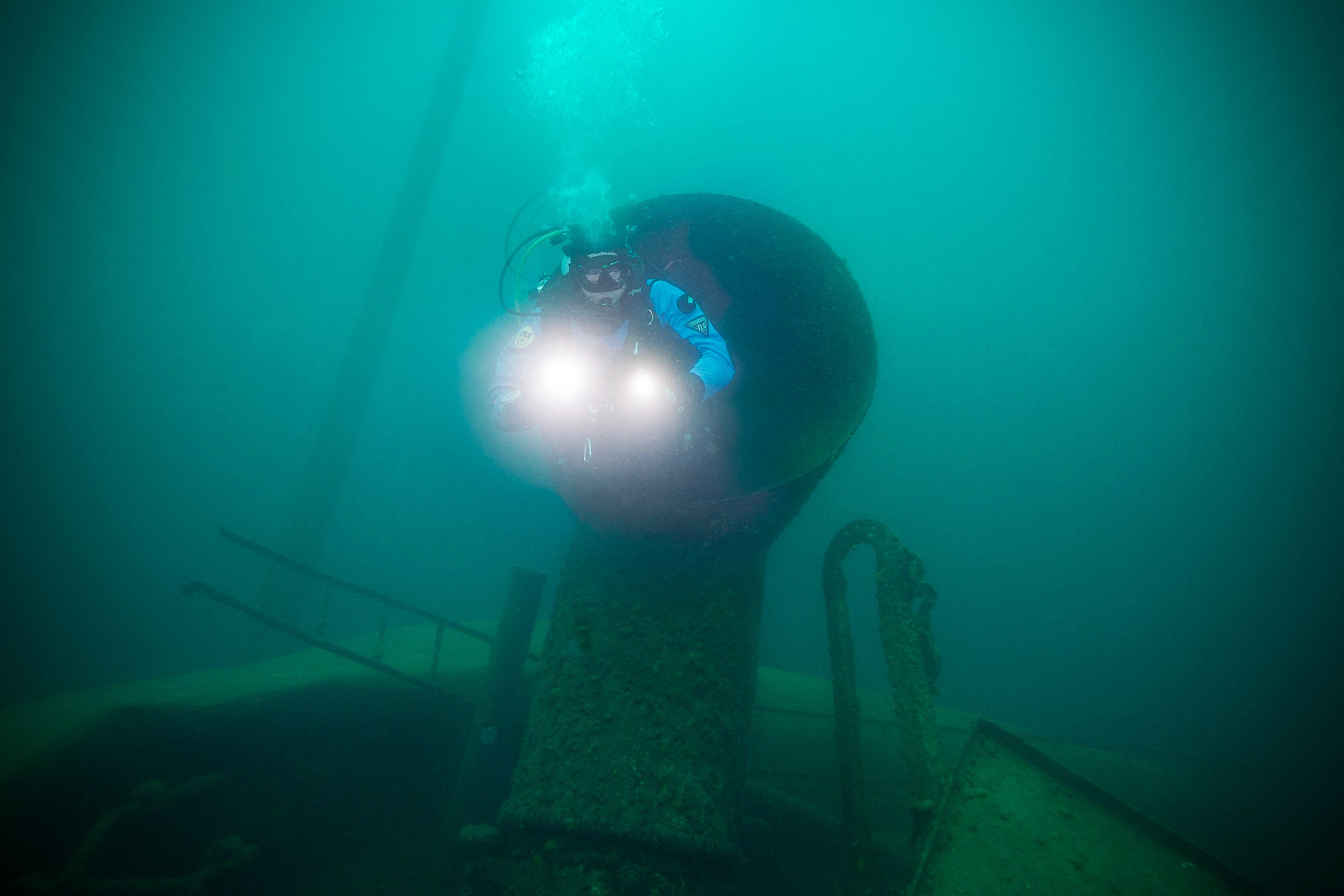
Every time I press the fill valve on my chest to add air to my suit, I get a blast of 36-degree (Fahrnheit) water instead. I’m hovering over the Emperor’s aft coal bunker, at 140 feet, and at that depth my bottom time is limited to about 13 minutes before it becomes a decompression dive. With a suit full of icy water, I wouldn’t last long on a deco hang. But I want to see this thing before I ascend. Sitting upright and intact, the massive ship is one of the finest wreck dives in the Great Lakes, if not the world. I clench my regulator mouthpiece between my teeth and try not to think about the frigid water pooling in my boots, soaking my wool socks and freezing my feet. I drift over the maw of the coal bunker, past a ventilation funnel and cruise past the open windows and crew cabin doors. Bunk beds and desks remain inside amid scattered debris, evidence of how quickly the ship went down after running aground on the Canoe Rocks shoal.
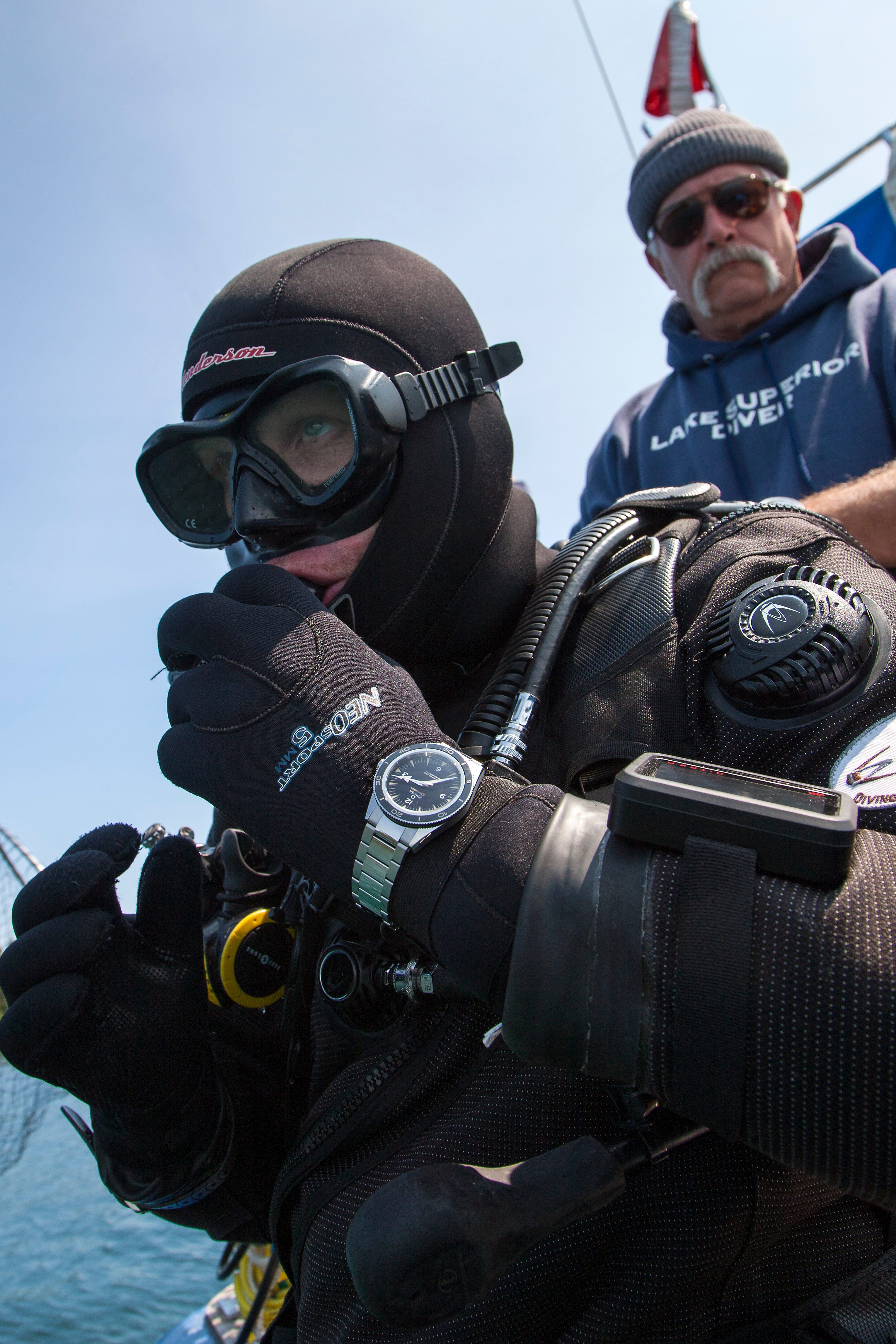
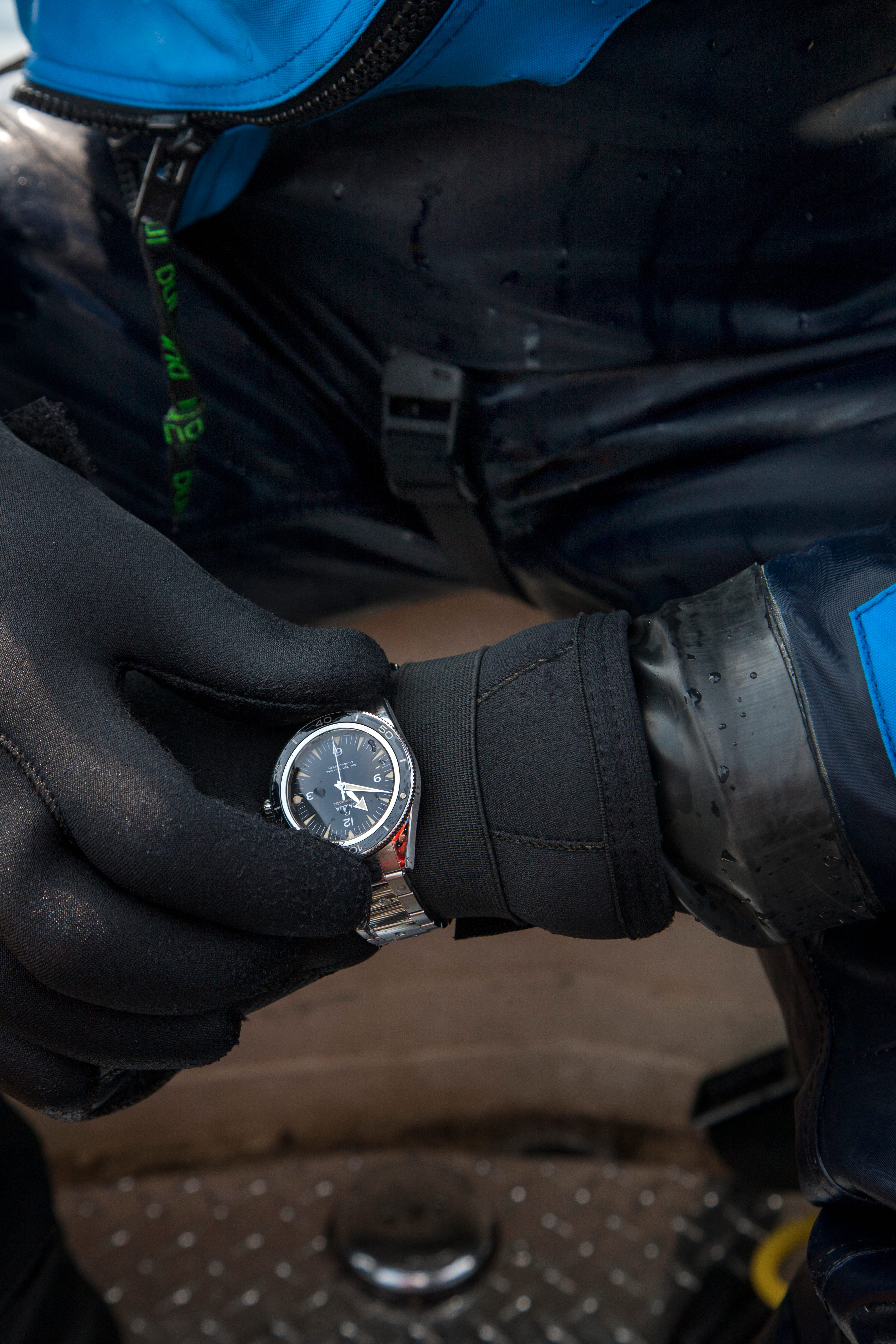
Despite its reputation, the Emperor is only seen by a handful of divers every year, due in part to the cold water but also its remote location, off the shore of Isle Royale in the middle of Lake Superior; I want to make the most of my dive here, even if I can’t feel my feet anymore. A glance at my wrist tells me time is up: the broadarrow minute hand of the OMEGA Seamaster 300 approaching the 13-minute hash on its LiquidMetal bezel. I turn for the mooring line and angle for the sunlight far above.
Isle Royale is the largest island in the largest freshwater lake in the world. Cigar-shaped and 45 miles long, it is home to moose and wolves but no permanent human settlements. It also happens to be the site of some of the best shipwreck diving in the world. Over a century of active shipping on the fickle and volatile Great Lakes has seen thousands of wrecks from Duluth to Quebec City. But it’s the handful around Isle Royale that makes divers brave the long journey and cold water to visit. The rocky reefs surrounding the island played havoc with the freighters that passed by, hauling wood, wheat and iron ore for cities further east. The cold freshwater there preserves metal and wood remarkably well and the wrecked vessels appear almost as they did on the day they went down, eerily un-decayed, window moldings and gilt lettering still crisp and bright.. Of course, to see these wrecks takes some nerve and a lot of specialized equipment. But it’s worth it.
Most of today’s great dive watches can trace their roots back to the 1950s and ‘60s. SCUBA diving was in the full flush of popularity; Cousteau, Sea Hunt and Flipper were on TV and James Bond was fending off sharks and bad guys underwater on the big screen. The dive watch was not only necessary kit for subaquatic maneuvers but a symbol of derring-do and masculinity topside as well. OMEGA introduced its first diving watch in 1957, the Seamaster 300, alongside two other “Masters”, the Speedmaster and the Railmaster. All three watches made use of the same 39-millimeter case but then diverged in form and function. That prototypical Seamaster 300 sported a rotating elapsed time bezel with a narrow Bakelite insert, broadarrow handset and 200 meters of water resistance, which OMEGA says was the limit of testing equipment at the time. The watch straddled utility and style better than many other dive watches of the era and remains a desirable collector’s piece to this day.
In 2014, OMEGA pulled the curtain back on its first Seamaster 300 since 1970, the Seamaster 300 Master Co-axial. The watch drew almost unanimously positive reviews for its pitch perfect blend of vintage styling and modern watchmaking technology. This was the watch many diehard OMEGA fans wanted the company to bring back and they did in spectacular fashion. There’s the narrow bezel like the 1957 original, but crafted from scratchproof LiquidMetal instead of fragile Bakelite. The straight-lugged case without crown guards is there too but increased to 41 millimeters to better suit modern (Ed.: circa 2014) tastes. The no-date dial is a textured matte black with the familiar Seamaster script and triangular markers, which are done in a perfect café au lait tone, as if the watch had been aging in a Royal Navy diver’s locker for 60 years. While the styling of the new Seamaster 300 is enough to make a dive watch fan weak in the fins, it’s what’s inside that really makes this watch swim.
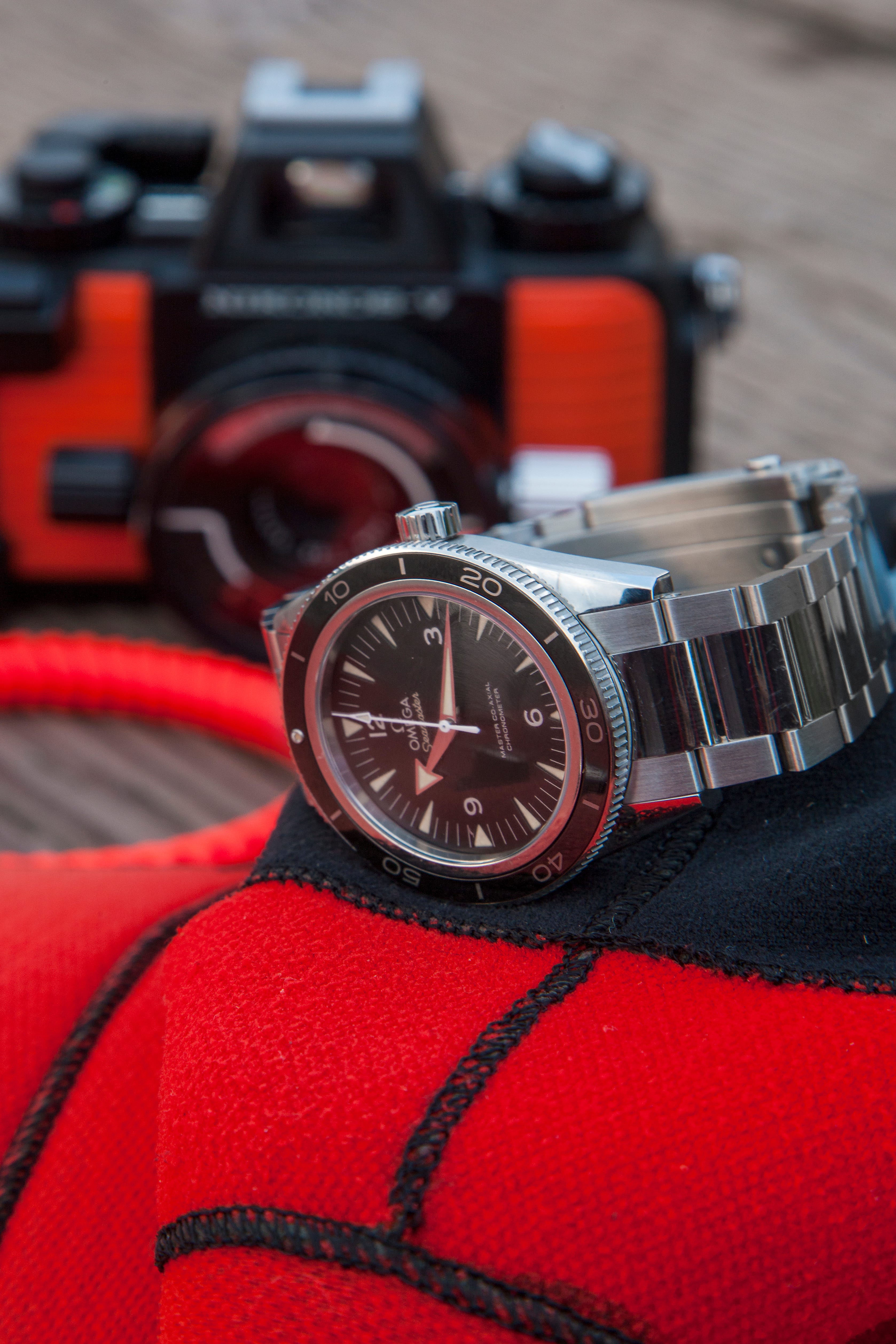
The “Master Co-axial” part of the name refers to OMEGA’s calibre 8400, a twin barrel self-winding movement that doles out seconds and minutes through a co-axial escapement. Decoration consists of radially patterned bridges and winding rotor that seem to magnify the movement, which already fills the ample case. While I don’t usually like display casebacks on rugged tool watches, OMEGA chose to use one to show off the calibre 8400’s pièce de résistance, the anti-magnetic technologies that render it impervious to magnetic influences, even those greater than 15,000 Gauss. With no need for a soft iron movement holder, the movement can be admired on surface intervals. But how well would it do in very cold water? I wanted to find out.
In 2014, Lake Superior saw its second greatest ice cover in recorded history, with over 90% of its 32,000 square miles frozen over from an Arctic winter. In mid-June, icebergs were still seen drifting in Duluth harbor. We motored out from Grand Portage, last stop before the Canadian border, during the second week in July, expecting frigid diving conditions. The captain of our chartered boat told us the lake temperature was hovering around 36 degrees (2 degrees Celsius) and likely wouldn’t crack 40 by the end of the summer diving season. Calm seas and balmy sunshine on the four-hour boat ride to the island belied the subsurface conditions and we warily waxed the zippers of our drysuits and triple-checked the O-rings on our camera housings. It is said that Hell is a hot place but deep, cold water can do insidious things to a man and his gear.
The spectre that looms over the shoulder of every cold water diver is regulator free-flow. Even well maintained cold water-rated regs can freeze up and stick open, causing a torrent of air to pour out, emptying a tank in less than a minute. At 140 feet deep, this is a scary proposition. But after two days of diving a number of wrecks, I hadn’t had any issues and confidently started my descent on the Emperor. As the water pressure crushed my drysuit to my body like plastic wrap, I needed to add air to my suit to relieve the pressure and keep a warm layer surrounding my body. Or at least that’s how a drysuit is supposed to work. But that’s when my fill valve gave up the ghost and my drysuit became a wetsuit, soaking my thermal insulation layer and filling up my boots.
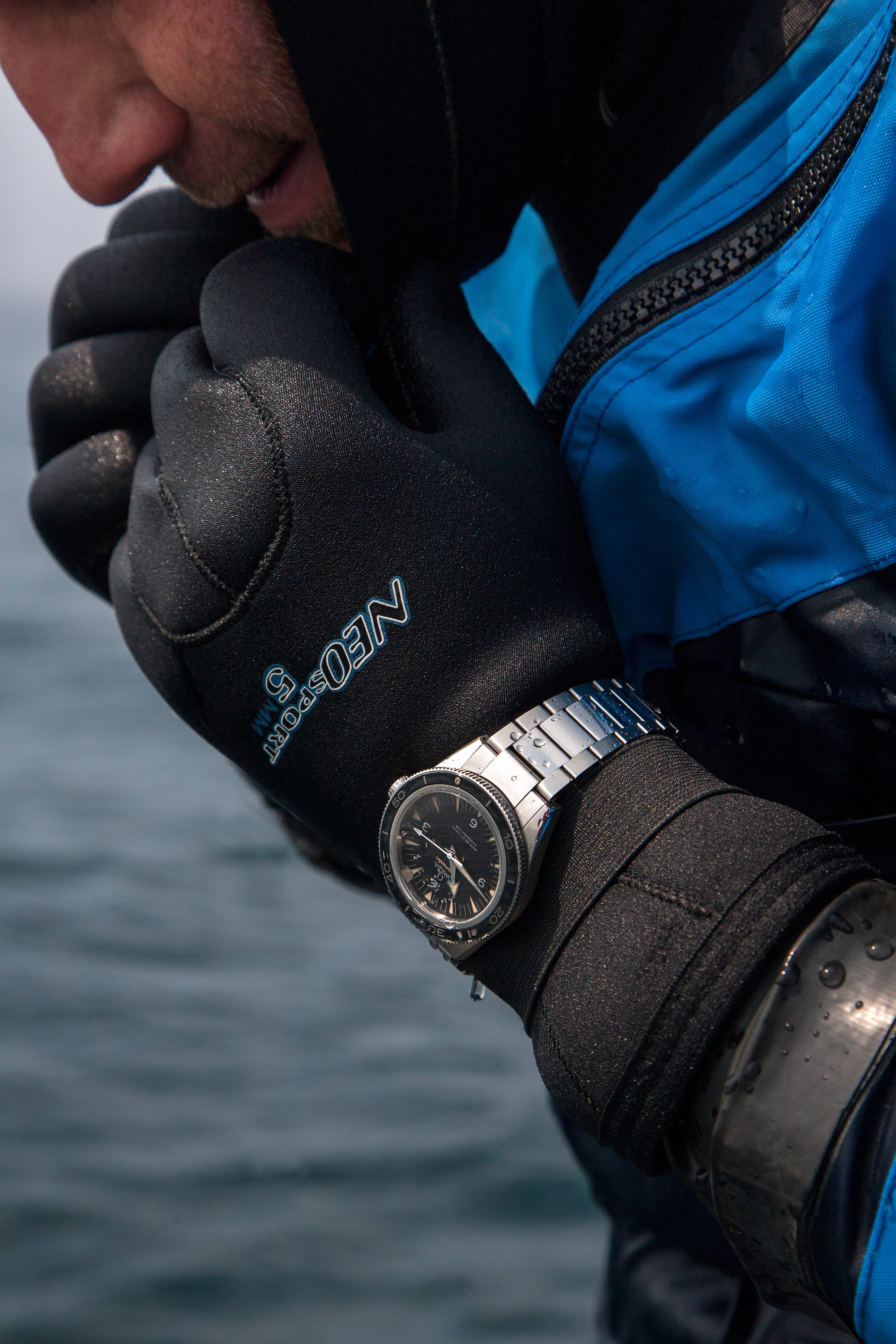
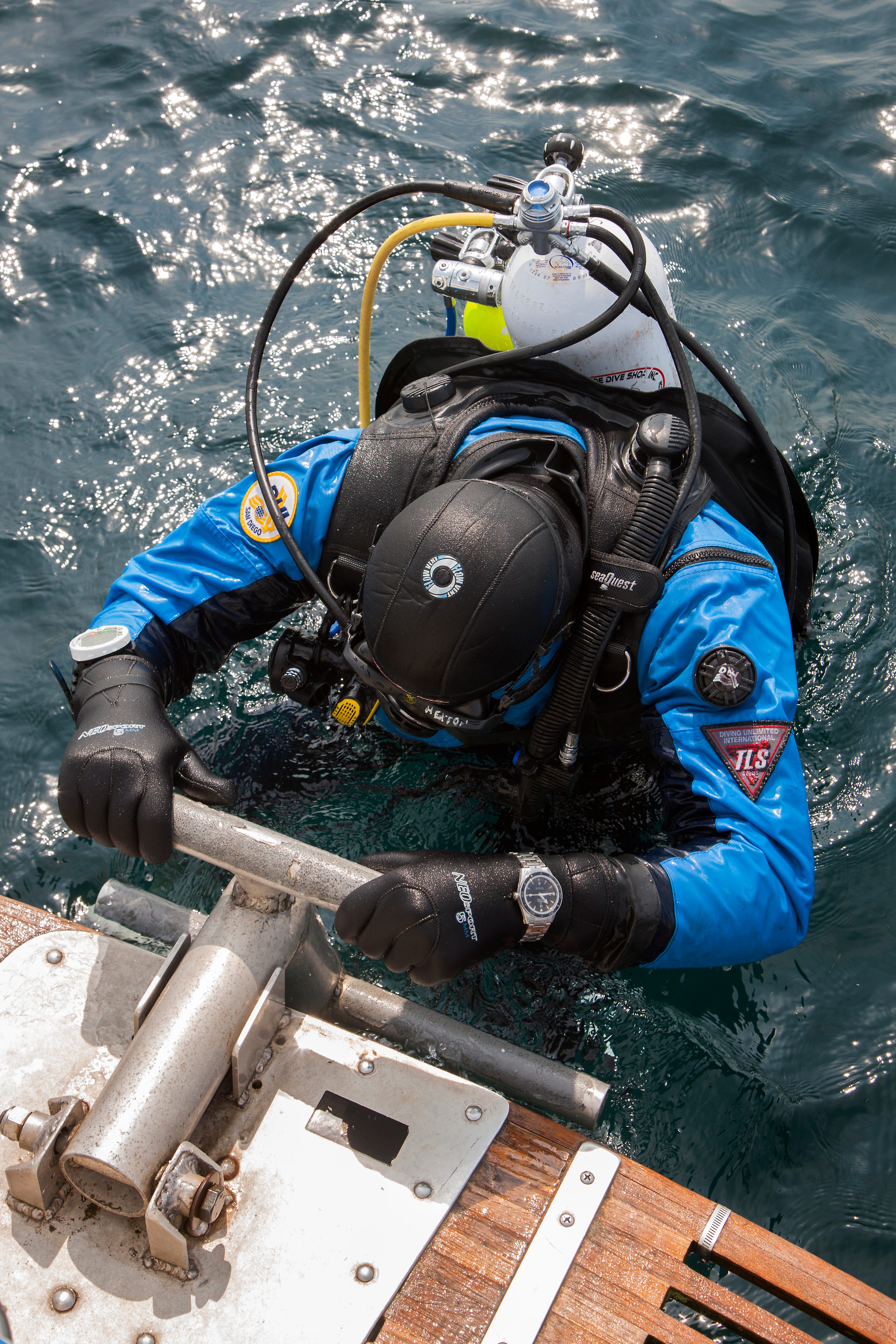
Cold water also can affect a dive watch. If it’s not properly sealed, the extreme cold can cause contraction of rubber O-rings in both camera housings and watch cases. On another Superior dive years earlier, I emerged to find moisture inside the case of my 1,000-meter IWC dive watch, as well as an inch of water sloshing in the bottom of my DSLR housing. I’m happy to report that this fate did not befall the Seamaster 300, which is rated to the full 300 meters alluded to in its name. Climbing the swim ladder at the transom of the dive boat, I noticed a mist of condensation on the crystal but it was on the outside, where relatively warmer air met the chilled sapphire. Another factor with cold water diving is simply whether the watch would even fit. Drysuits and heavy gloves necessary for cold water require a very long strap or an expanding bracelet clasp. Unlike its historical inspiration which had a rattly think bracelet and foldover clasp, the new Seamaster 300 has a solid link bracelet with a ratcheting dive suit extension built into its pushbutton clasp which proved more than adequate. The cold also had no discernible effect on timekeeping, as the chronometer-certified movement, adjusted for position and temperature, shrugged off the conditions that were causing me such discomfort. Clearly this was a watch that could take more than I could.
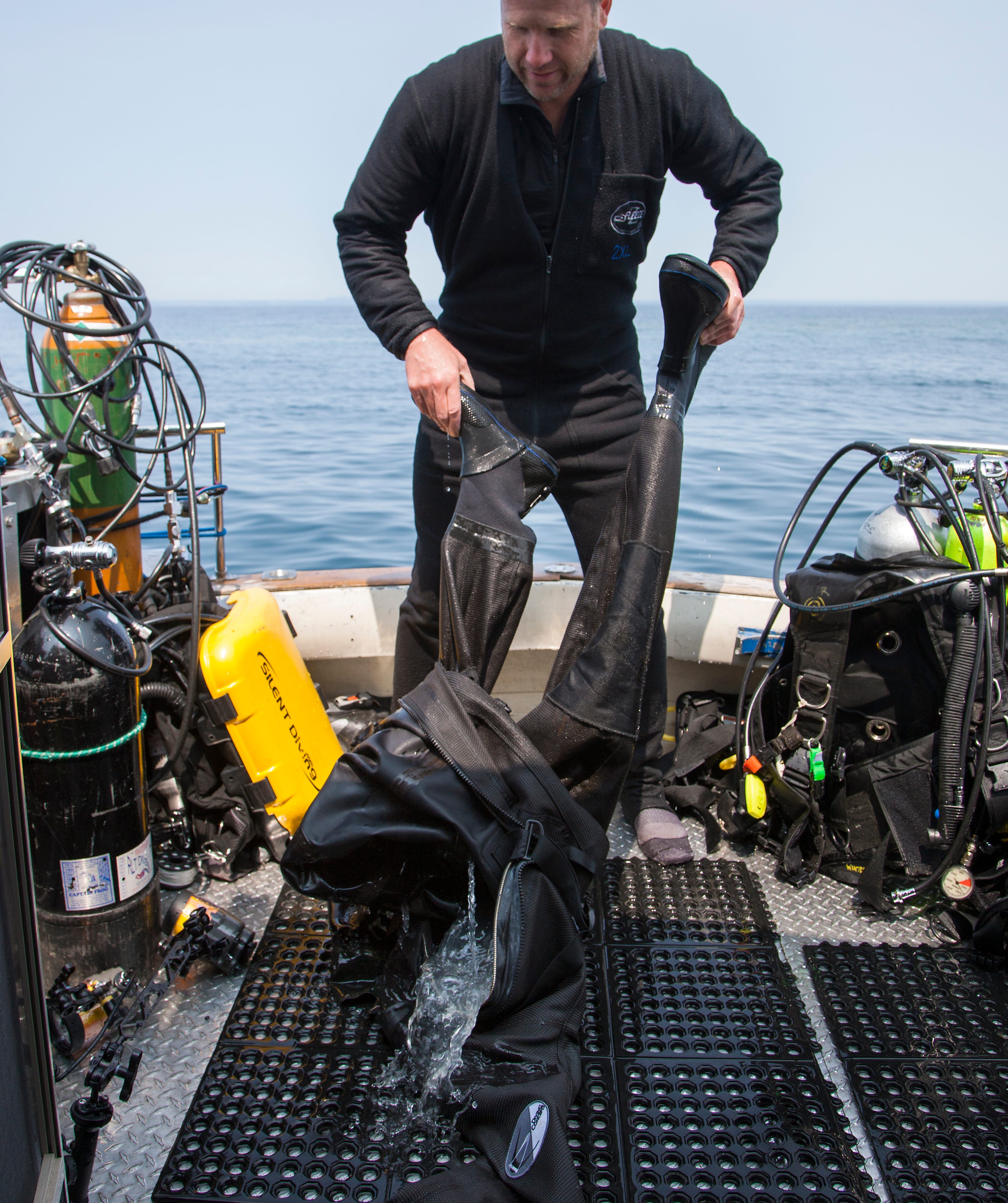
I decided to add a minute to my safety stop as I ascended from the Emperor since I had gone so deep. But the four minutes I hung there on the mooring line at 15 feet felt a lot longer as the cold penetrated into my bones and I started to shiver. If I didn’t surface soon, full-on hypothermia would set in. I tried to put the cold out of mind by focusing on the calm sweep of the Seamaster 300’s seconds hand counting out my safety stop. Dive watches aren’t as necessary these days as they were in the 1960s but the digital dive computer on my opposite wrist wasn’t doing much to comfort me. Wearing a fine mechanical dive watch serves as more than a timing device; it’s a talisman, a link to the past and countless divers who wore similar timepieces diving wrecks like this in the early, more adventurous days of diving. To hover above a 60-year old shipwreck wearing the Seamaster 300 was a little bit like time travel. But at last, my time was up and I slowly ascended to the dive boat above, climbed aboard and stripped off my sodden layers. It was good to be home and dry, given a rare reprieve by Superior, to live to dive another day.
What would be your take on this watch now Jason. I know they updated it a little in the last few years
This takes me back to when I was certified to dive the YBOD on the wreck of the Keystorm in the St. Lawrence. A little warmer but the diving was spectacular. And I love the watch! Thank you!