
Channel Islands Dispatch, vol. 3
Under pressure once more
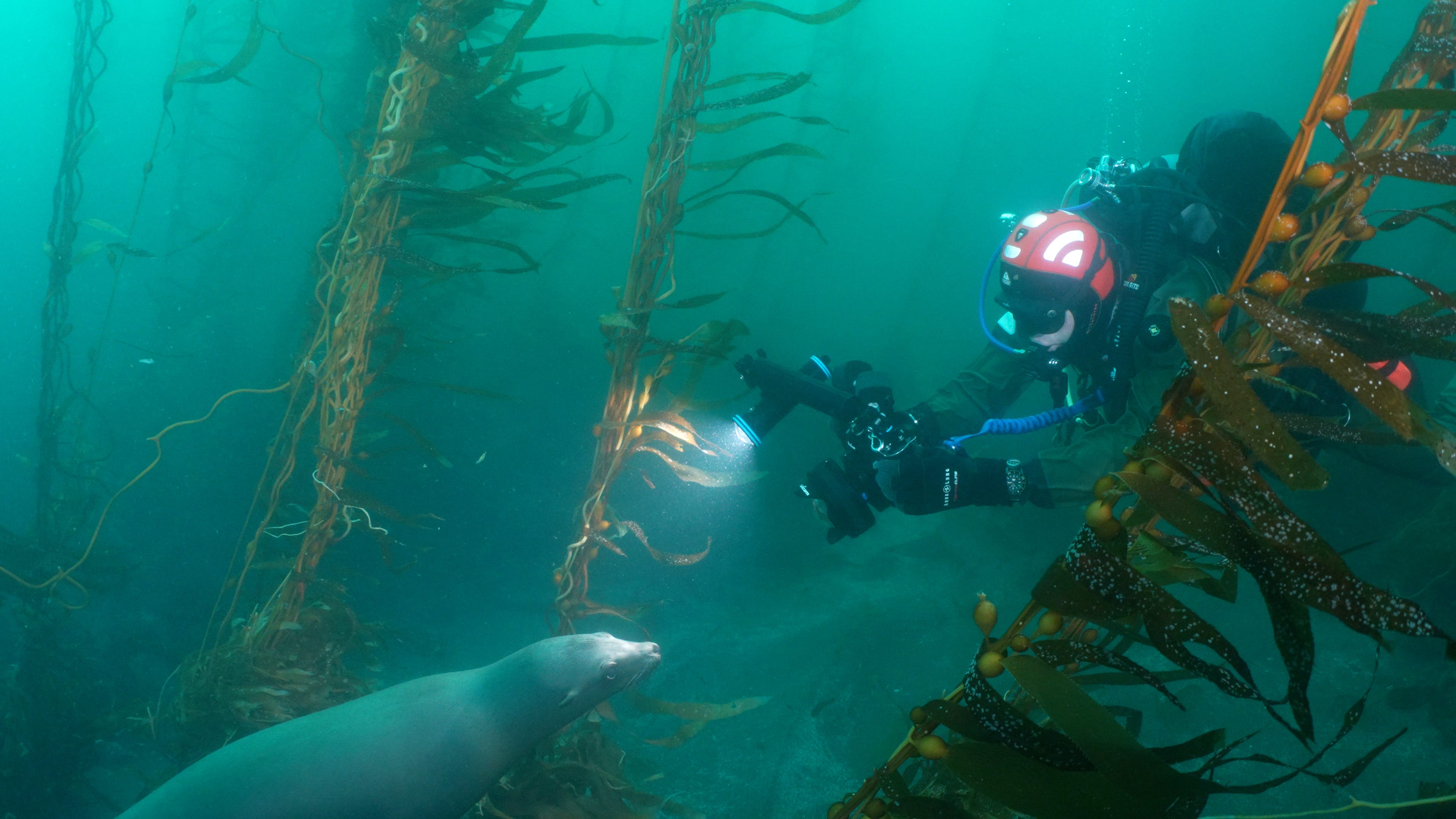
I’d felt pretty smug about my drysuit so far. While the wetsuit divers were shivering between dives, pouring hot water down the front of their suits on the boat, I casually slipped out of my 1950s-tech rubber suit and polarfleece thermals, warm and dry. But you know what they say about pride going before a fall.
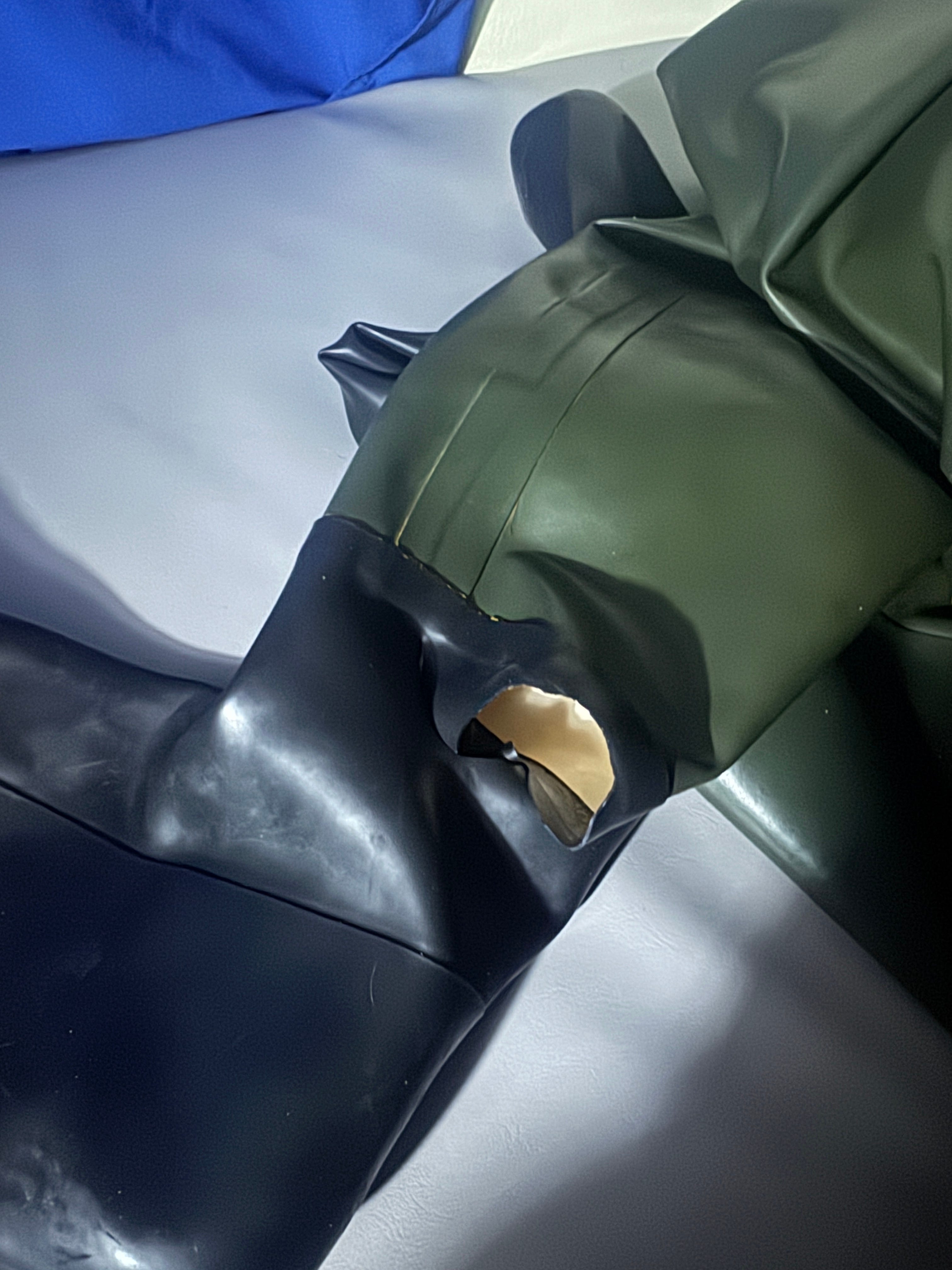
We’d motored through the night, from our anchorage at Santa Barbara Island out to Cortes Bank. This was to be the crown jewel of our week of diving, a Holy Grail destination. It’s one of those places for which the stars have to align in order to reach it, or dive there. That morning, as I was preparing my gear on the sodden dive deck of the boat, to my horror, I noticed a sizable tear in the left ankle of my drysuit. It wasn’t just a small slice I could patch with a blob of Aquaseal, but a huge tear. My heart sank. Never mind Cortes Bank, this would likely be the end of my diving for the entire week.
If you’ve been following me for a while, you’ll recall that I’ve done two previous expeditions with Oceana to California’s Channel Islands. You can read more about those here and here, so I won’t go into the background of my involvement, or the goals of these expeditions. But one notable result of the 2024 research was the successful adoption of a new California law phasing out set gill nets, those indiscriminate, massive sunken nets that catch anything that swims into them, endangered, desired, or not. The environmental DNA collected and analyzed on those two expeditions turned up over 12,000 unique species in the waters we analyzed around the islands. This third and final expedition of a trilogy underwritten by Blancpain would be something of a victory lap for Oceana, but also an opportunity to do some followup research.
We’d waited until November this year because water temperatures tend to be warmer, visibility improves, and there’s better opportunity to spot elusive sea life. Our first two days diving around Santa Barbara Island bore this out. with the exception of one dive that saw an anomalous 54-degree water temp. The other dives of our three-per-day regimen were nothing short of spectacular. One fish we’d hoped to see in the Channel Islands was the giant black sea bass. Once numerous here, these car-sized behemoths had been overfished for decades and now were a rarity. But around Santa Barbara, we encountered two, and the resulting chatter on the boat after those dives was akin to the spotting of Sasquatch. Then there were the sea lions.
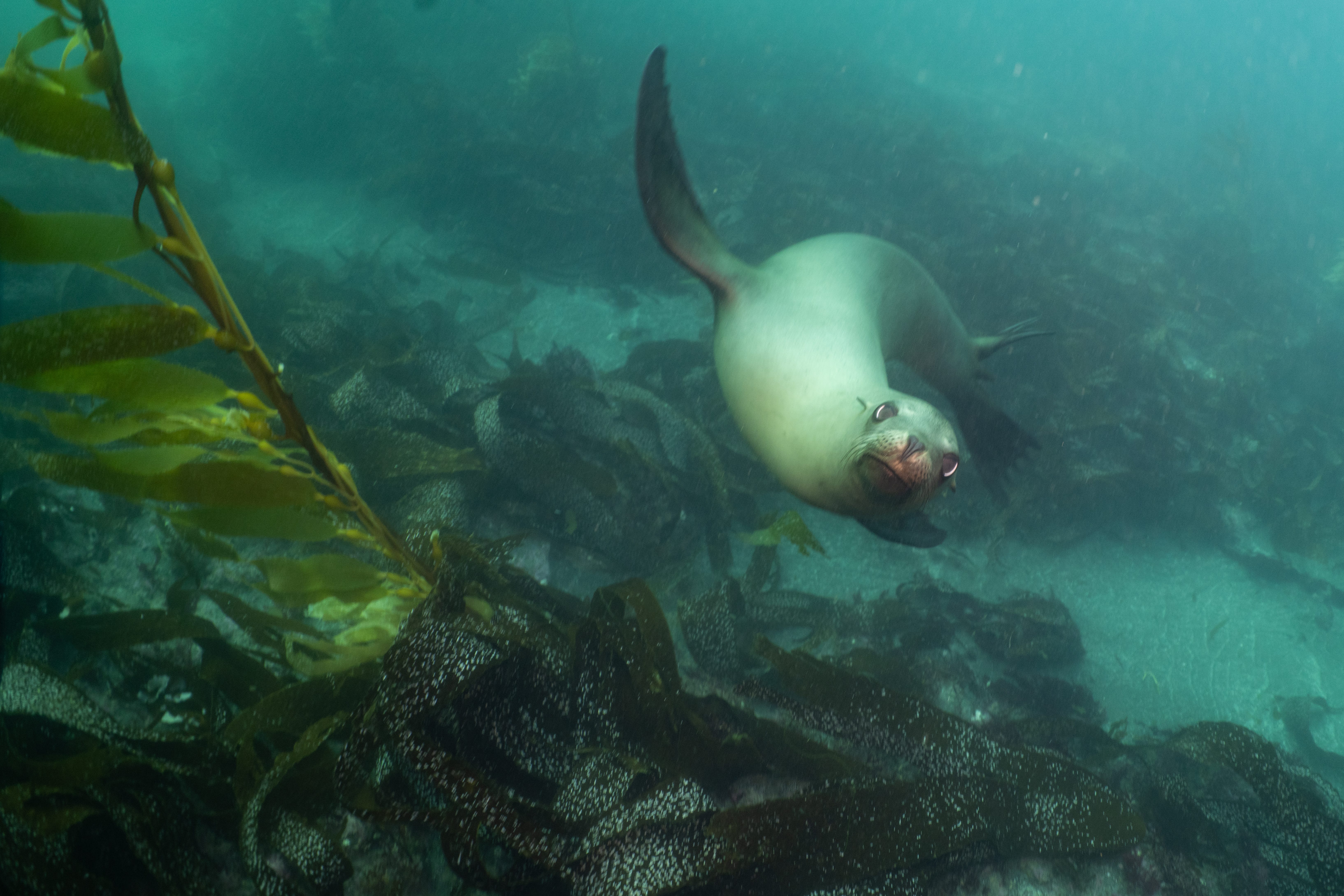
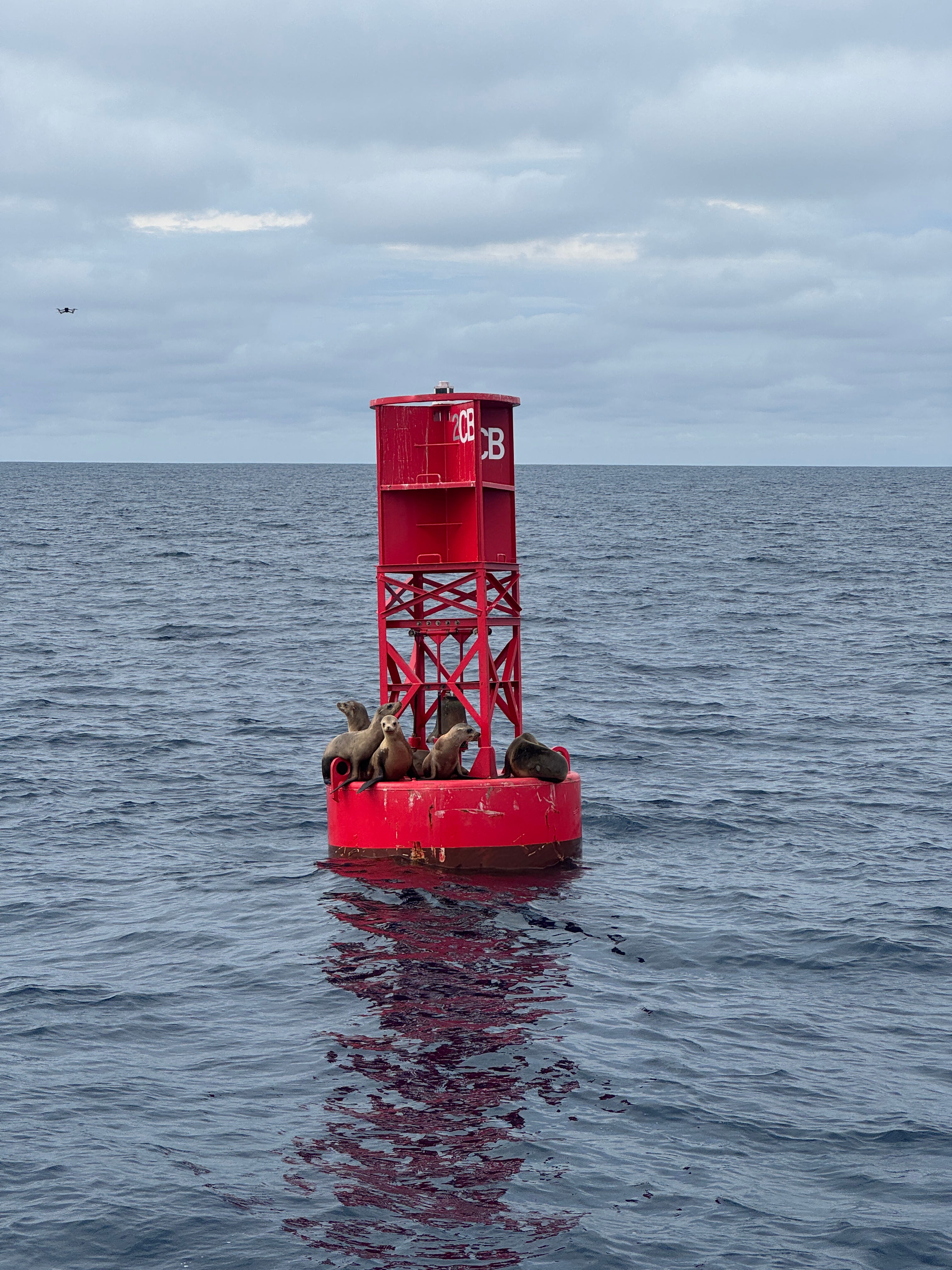
We anchored and dove just offshore from a known sea lion rookery, and from the boat we could hear their barking, though we couldn’t see them through the fog. Once in the water, we became a welcome diversion for the juveniles, who swarmed around us clumsy, slow swimmers with funny suits and blowing bubbles. They were playful, inquisitive, and graceful, swooping just past the camera, nipping at our fins, snapping their jaws, and following us everywhere we went, in and out of the lush kelp forest. Forget about looking for other species, the sea lions demanded attention, and it was a thrill to interact with them. As I’ve written before, I always marvel at how diving allows such close interaction with so many wild animals, an experience that, on dry land, seldom happens.


Cortes Bank is 110 miles off the coast of Southern California. It isn’t an island. It is a submerged shelf of rock that rises up from a depth of 6,000 feet to as shallow as 10 feet in some places. Ships have run aground here, it is a reputed hunting ground for pelagic predators like tuna and great white sharks, and it is known to produce some of the biggest waves on the planet. Imagine ocean swells crossing the deep water of the Pacific and then abruptly meeting this shallow bank of rock. 100 foot waves are not out of the question here. Big wave surfers watch the weather and make the long pilgrimage out there on big boats stuffed with jet skis and surfboards for a chance at a world record. But what makes for good surfing does not make for good diving, so when the captain of our chartered boat saw a weather window of light winds and smaller swells, he said we could give it a try.
With my drysuit torn, I took a desperate measure: duct tape. I shimmied into the suit and wrapped ample layers of duct tape around the tear at my ankle, thinking it would keep out most of the water. I was wrong. I jumped in the water off the bow for the first dive of the day at Cortes Bank and immediately felt my leg getting wet with the ingress of sea water. It wouldn’t be safe to dive. The added weight of water filling my suit, and the possibility of hypothermia made diving a risk not worth taking, so I paddled back to the transom and aborted my dive.
There’s the well worn phrase, “two is one, one is none,” meaning that you should always have a backup of important equipment. But traveling across the country with heavy dive and camera gear precluded the addition of my bulky 8-millimeter wetsuit, so I left it at home. As luck would have it, one of the safety divers onboard had a spare 8-millimeter hooded wetsuit. He was wearing a drysuit all week and had brought it as a backup. He was a few inches shorter than me, and the suit was damp and smelly from his diving a week earlier, but it was my only hope if I wanted to keep diving. As luck would have it, it fit me—just. I was back in the water for the next two dives.
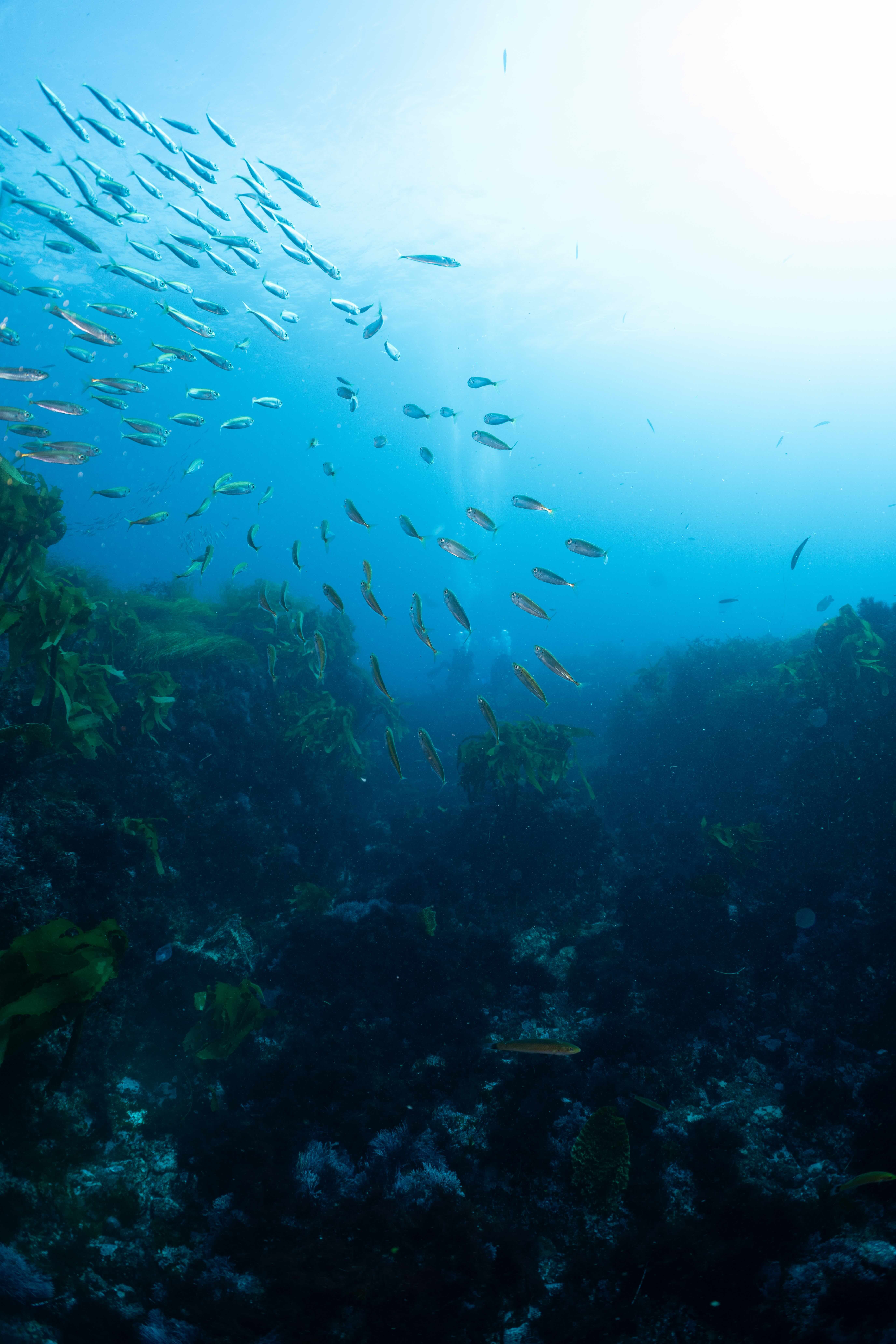
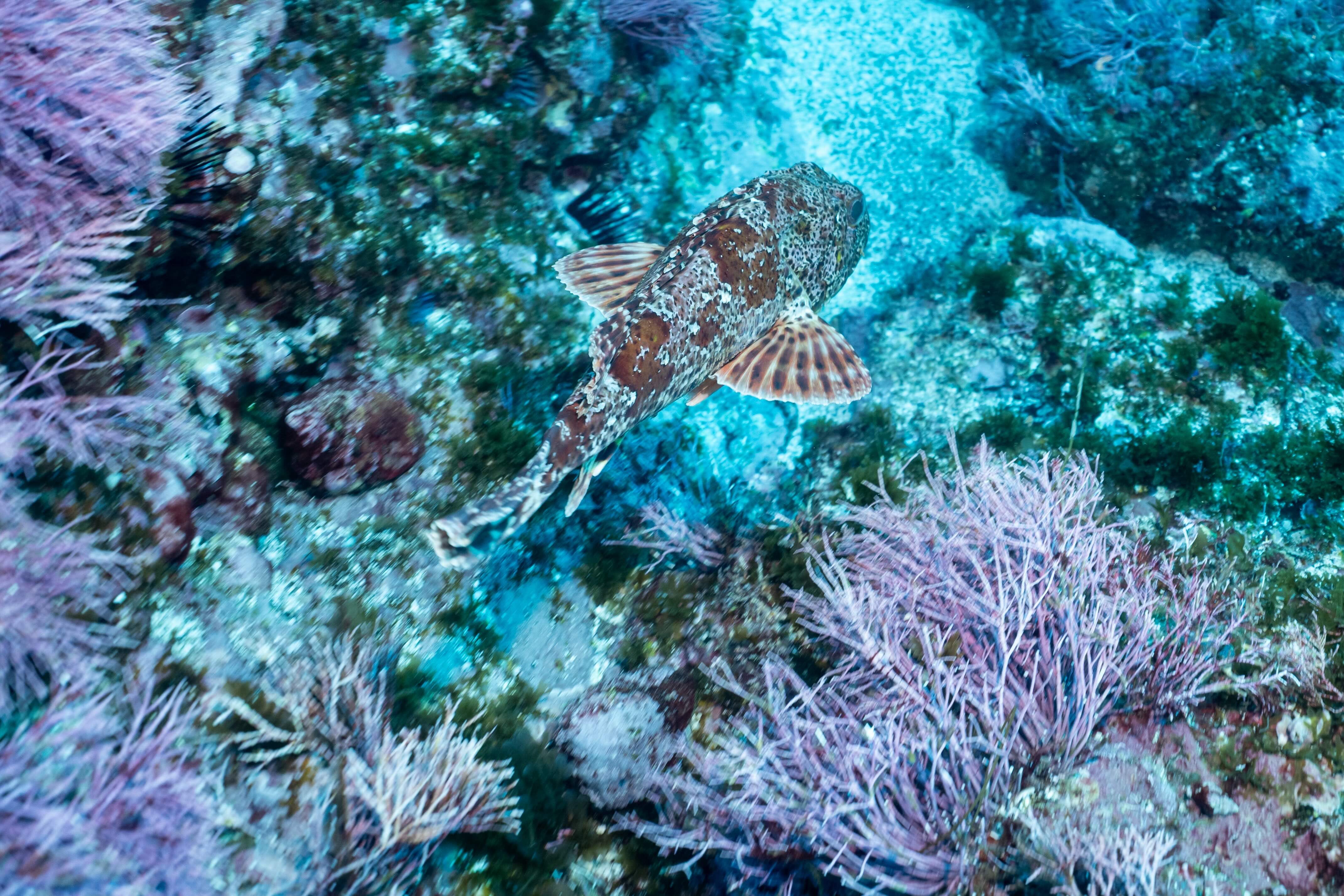
Unlike the green kelp-tinted waters around the Channel Islands, the waters around Cortes Bank were clear and blue, with visibility well over 100 feet. Our dives were to around 60 feet, and even at that depth, there was considerable surge as the ocean swung us to and fro across the rocks. We could duck into canyons and alongside steep dropoffs to find shelter from the current and the reward was vivid color of pink hydrocorals and psychedelic green sea grass that swayed across the top of the shelf like a comb-over haircut in a windstorm. There were huge schools of tiny silver baitfish, scorpionfish, lobsters, rockfish, and sheepshead. The sheer volume of life there was awe-inspiring. This was what diving, and the ocean, everywhere should be like.
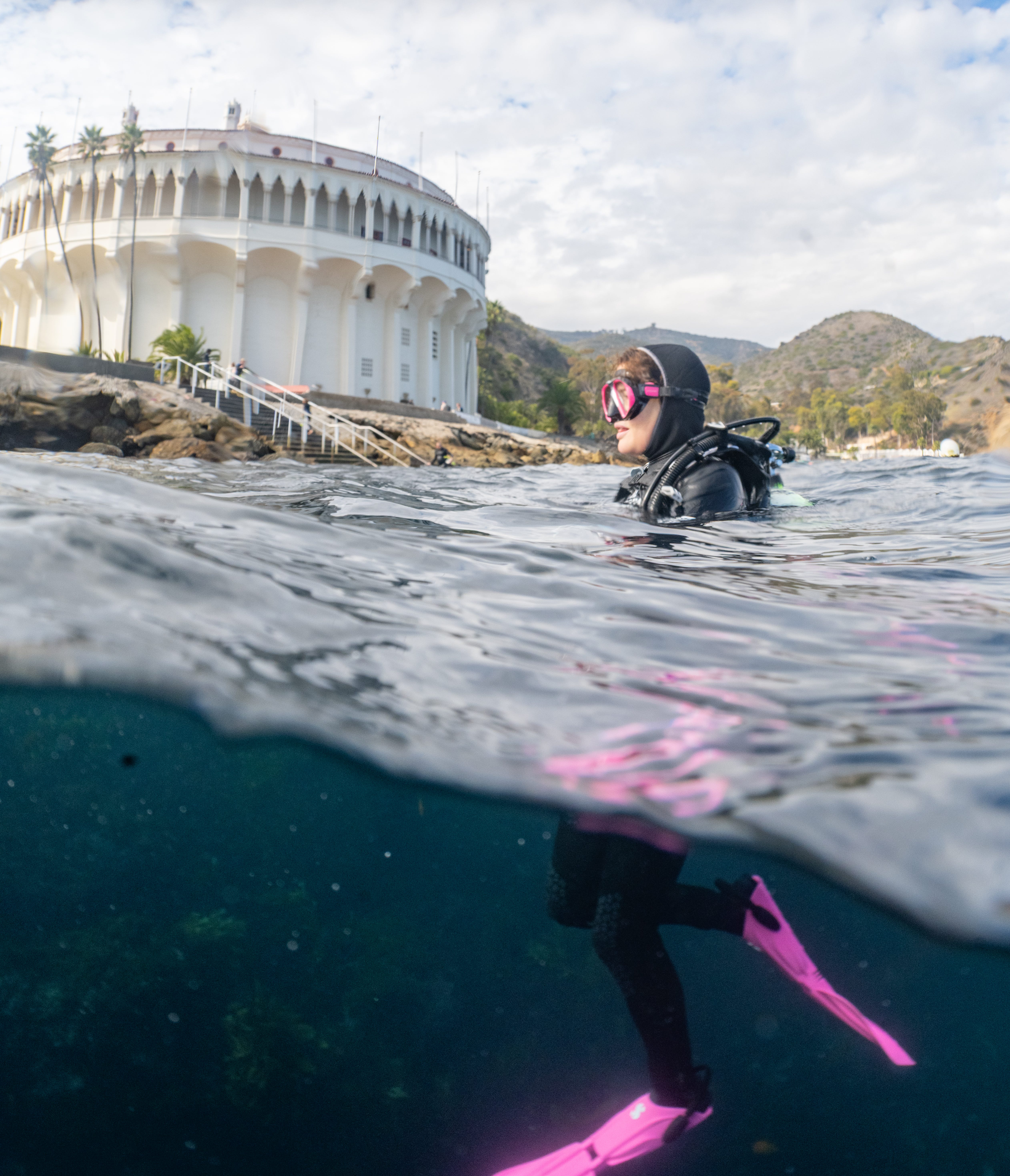
After a day like that, anything else would be gravy, anti-climactic. And it largely was. We motored back, again through the night. I rode it out in my tiny, increasingly fetid sleeping berth. I awoke the next day and the view off the stern couldn’t have more of a contrast. We’d moored off of Casino Point, on Catalina Island, a tourist and diving destination just a short ferry ride from Long Beach. We’d spend the day there, hosting VIPs (an actress, and a well known photographer) and diving the shallow kelp bed there. It all went fine, but the shock of civilization was a bit jarring after days of our remote anchorages and the company only of our small team and the sea lions. The next day would be our last, and it would be spent off of Anacapa island, on the way back to Ventura on the mainland.
As it happens, the other shoe finally dropped. The weather turned and we faced huge swells, heavy rain, and wind, and the boat struggled to plow through the seas. The captain called off diving as too dangerous. None of us disagreed. By the time we reached the marina in Ventura, I was feeling a bit green and thoroughly damp, happy to be finally “home and dry.”
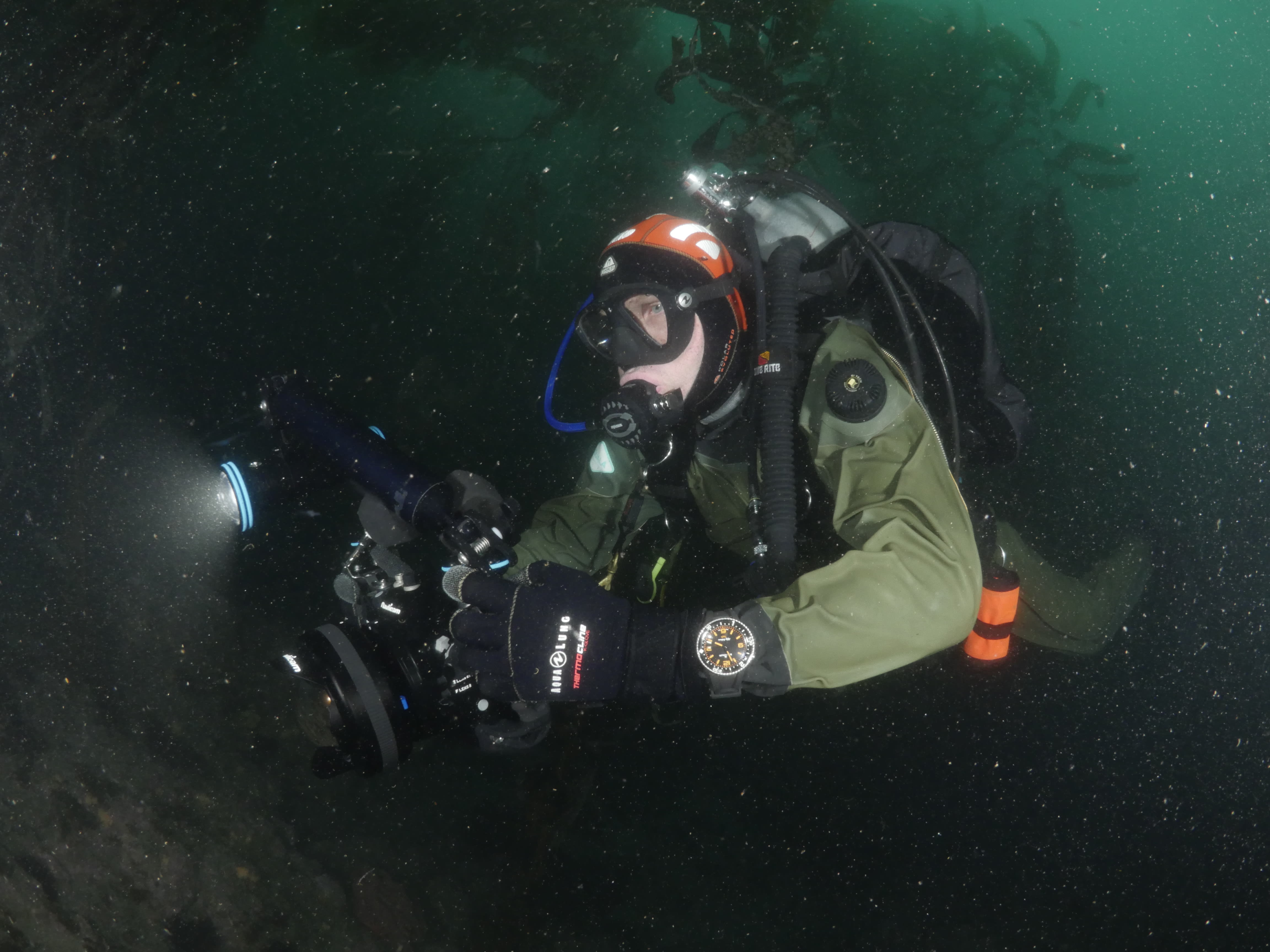
As this was a Blancpain funded expedition, once again, there were some fun watches to abuse. The day before I flew from home, I received a loaner Fifty Fathoms Tech Gombessa, a watch whose launch I participated in two years ago in French Polynesia. Make no mistake, this watch is utter overkill for typical scuba diving, with its three-hour timing function designed for lengthy rebreather diving, and a helium release valve in case you find yourself in a pressurized chamber for any length of time. Still, it is a lovely piece of kit to behold and to wear, with its XL length rubber strap and deep black dial, huge but light titanium case and the domed sapphire timing ring. I actually only wore the watch on one dive all week, since my role on the expedition(s) was to take photos of other people. So I ended up strapping it on other divers for photo ops.
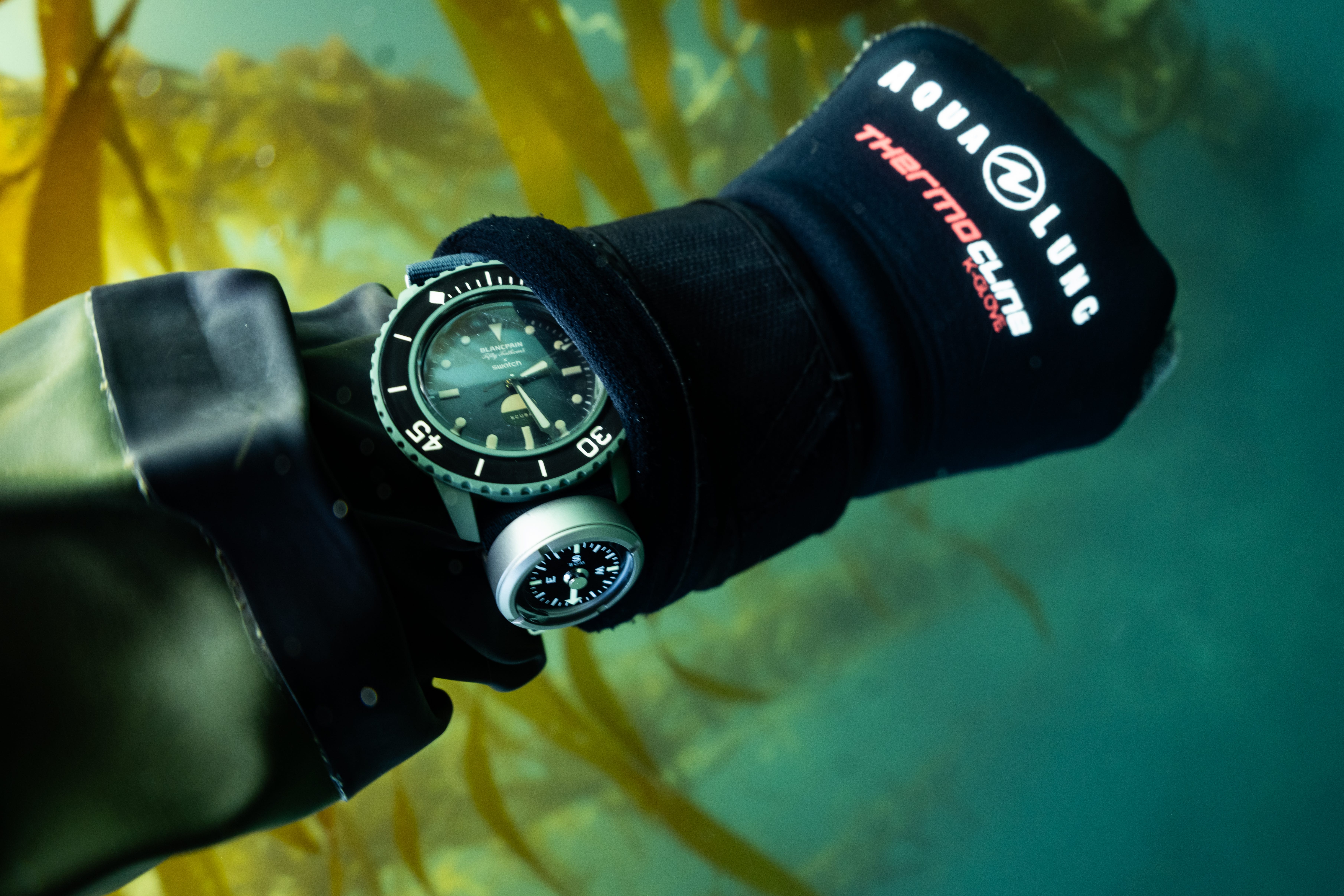
What I did wear for all the other dives was my own Blancpain x Swatch Scuba 50. I’ve got another story in the works about that watch, so I’ll keep it short here, but suffice it to say, I’m immensely proud of this plastic Swatch with its modest depth rating, no screw-in crown, and attainable price. We made some good memories together.
My drysuit has already been packed off to get repaired. I’m not sure when I’ll be diving next, maybe under the ice in March. It’s been a pretty light year for me underwater—only two trips—and I’m OK with that, especially when those two trips took me to the Philippines and to Cortes Bank. Quality over quantity. In any case, wherever, and whenever I dive next, if it’s in a drysuit, I’ll also be packing along my wetsuit. Two is one, one is none.
Caveat - I've made a similar comment on your Insta post about Cortes Bank, Jason.
For those interested, there's a terrific book about it called "Ghost Wave." While surfing oriented, there is also the story of the guy who wanted to start a new country there by sinking a large boat / small ship and creating enough "land mass" above sea level. The result was disastrous, and is a major hazard for surfers.
Then there's the surf movie, "Step Into Liquid," which has a bunch of Cortes Bank footage.
OK, I'll sit down now... 😉